
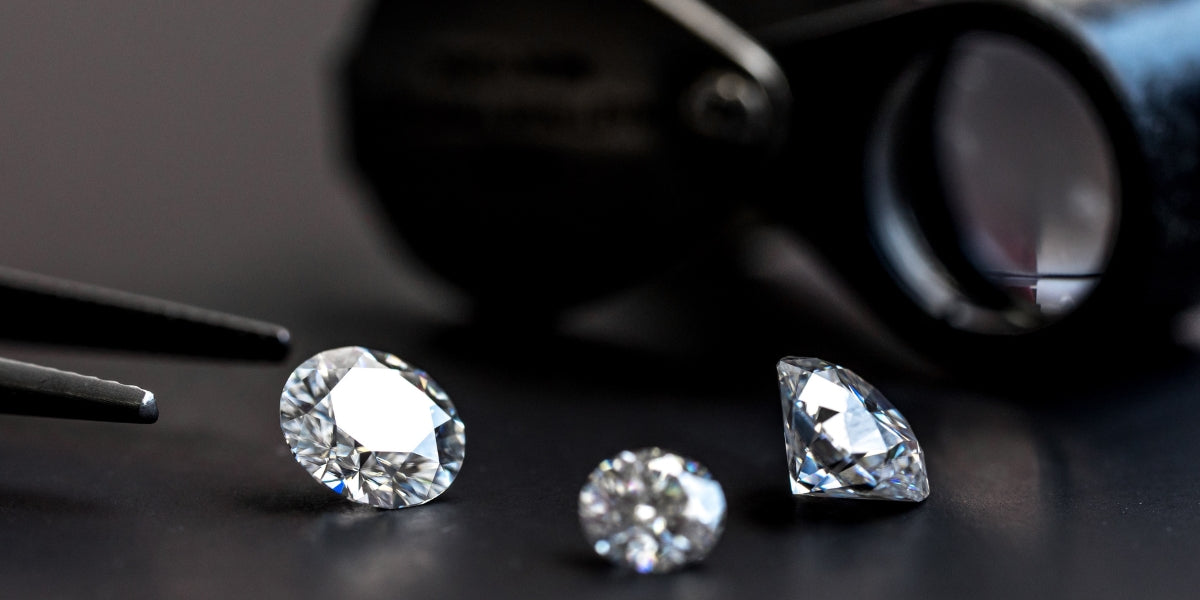
In today’s world of smart shopping, ethical choices, and value-driven decisions, consumers are no longer satisfied with buying the most expensive option simply because it’s traditional. Nowhere is this shift more evident than in the world of fine jewelry, where modern buyers are rethinking the stones they choose for their engagement rings, anniversary gifts, and personal adornments.
Diamonds may have reigned supreme for centuries, but alternatives like moissanite are making waves—and for good reason. Add to that the rise of lab-grown gemstones, and suddenly, the jewelry conversation becomes a thoughtful comparison of beauty, durability, ethics, and value.
So how do you decide what’s right for you? Whether you’re planning a proposal or simply indulging in a bit of sparkle, understanding the true differences between gemstones can help you make a more informed, and satisfying, decision.
Understanding the Origins: Earth, Lab, and Stars
To appreciate the differences between today’s popular gemstones, it’s important to look at their origins.
Natural Diamonds
Natural diamonds are formed deep within the Earth’s mantle over the course of billions of years. Through immense pressure and heat, carbon atoms are compressed and eventually form crystals that are extracted through extensive mining operations.
This natural process results in one of the hardest and most revered substances on the planet. However, diamond vs moissanites is known for its environmental impact and, in some regions, ethical concerns related to labor practices and conflict sourcing.
Moissanite
Moissanite was originally discovered in 1893 by French scientist Henri Moissan in a meteor crater. Natural moissanite is incredibly rare, so the moissanite used in jewelry today is grown in laboratories.
Though it’s not a diamond, moissanite is a gemstone in its own right, prized for its fire (rainbow sparkle) and affordability. Because it is created in a lab, it is free of mining-related issues and carries a much lower environmental impact.
Lab-Grown Alternatives
Technological advances have made it possible to create gemstones in labs that are chemically and physically identical to natural ones. This includes lab created diamonds, which are grown under conditions that mimic the Earth’s natural processes using either High Pressure High Temperature (HPHT) or Chemical Vapor Deposition (CVD) methods.
Unlike simulants such as cubic zirconia or moissanite, lab diamonds are real diamonds in every measurable way—just with a different origin.
Comparing Appearance: What Meets the Eye
When it comes to visual appeal, every gemstone has its own unique characteristics.
Brilliance and Fire
-
Diamonds have a signature sparkle that’s balanced and elegant. Their brilliance (white light reflection) and fire (colorful flashes) are well-known and sought after.
-
Moissanite, while visually similar to diamonds, tends to exhibit more fire, which can appear like a rainbow-colored flash. Some people love this extra dazzle, while others find it less classic in appearance.
-
Lab-grown diamonds look identical to mined diamonds because they are, in fact, the same material. Their optical properties—brilliance, fire, and scintillation—are indistinguishable to the naked eye.
Clarity and Color
-
Diamonds, whether natural or lab-grown, come in a wide range of clarity and color grades. The higher the grade, the more colorless and inclusion-free the stone.
-
Moissanite is generally sold as near-colorless, though some can have a slight yellow or gray hue under certain lighting conditions.
For many consumers, the differences are subtle and mostly noticeable under magnification or specific lighting. Most people won’t be able to distinguish a diamond from moissanite without a trained eye or special tools.
Hardness and Durability
Durability is crucial, especially for rings that are worn every day.
-
Diamonds top the Mohs scale of hardness at 10, making them the most scratch-resistant gemstone available.
-
Moissanite scores a 9.25, making it extremely hard and more than suitable for daily wear. It’s second only to diamonds and actually tougher in terms of resistance to breaking due to its slightly different crystal structure.
-
Lab-grown diamonds, sharing the same composition as mined diamonds, also score a perfect 10, offering the same durability and longevity.
If you’re concerned about how your ring will hold up over years of daily wear, all three options—diamonds, moissanite, and lab-grown diamonds—are excellent choices.
Ethical and Environmental Considerations
Modern consumers are placing a growing emphasis on how their purchases affect the planet and people.
Natural Diamonds and Their Complications
While the diamond industry has made strides toward transparency and ethical sourcing (like the Kimberley Process), some stones still come from conflict regions or leave a large environmental footprint due to mining operations.
Moissanite and Lab-Grown Gems
Both moissanite and lab-grown diamonds are created in controlled environments, ensuring traceable sourcing and significantly reduced environmental impact. They are also completely free from the human rights concerns often associated with traditional mining.
If sustainability and ethical sourcing are high on your priority list, lab-created gemstones offer an attractive alternative without compromising on beauty or quality.
Cost Comparison: Beauty on a Budget
Perhaps the most noticeable difference between these stones is their price tag.
-
Natural diamonds are the most expensive, with prices influenced by cut, clarity, carat, and color.
-
Moissanite is significantly more affordable, often costing 10-15% of the price of a comparable diamond.
-
Lab-grown diamonds fall in between—usually 30-40% less than natural diamonds, while offering the same physical and optical properties.
This affordability opens the door for larger stones, custom settings, or simply a more budget-friendly shopping experience. For many, the cost savings are not only practical but empowering.
Style, Symbolism, and Personal Preference
At the end of the day, choosing a gemstone is a deeply personal decision. It reflects your values, your budget, and your taste.
-
If tradition and long-term resale value matter most to you, a natural diamond might be the preferred choice.
-
If you’re looking for maximum sparkle, ethical sourcing, and affordability, moissanite may be the ideal solution.
-
If you want a real diamond without the environmental cost and high price tag, lab created diamonds offer the perfect middle ground.
Final Thoughts: What Really Matters
The modern jewelry landscape offers more choices than ever before. Gone are the days when a diamond was the only option. Today, moissanite and lab-grown alternatives are gaining popularity for their ethics, affordability, and impressive appearance.
There’s no one-size-fits-all answer. Your choice should reflect what matters most to you—whether it’s tradition, sparkle, sustainability, or savings.
And in the ever-evolving world of fine jewelry, that choice is more brilliant than ever.